

Cortagen – 20MG
$63.00
Discount per Quantity
| Quantity | 5 - 8 | 9 + |
|---|---|---|
| Discount | 5% | 10% |
| Price | $59.85 | $56.70 |
Scientific Overview of Cortagen
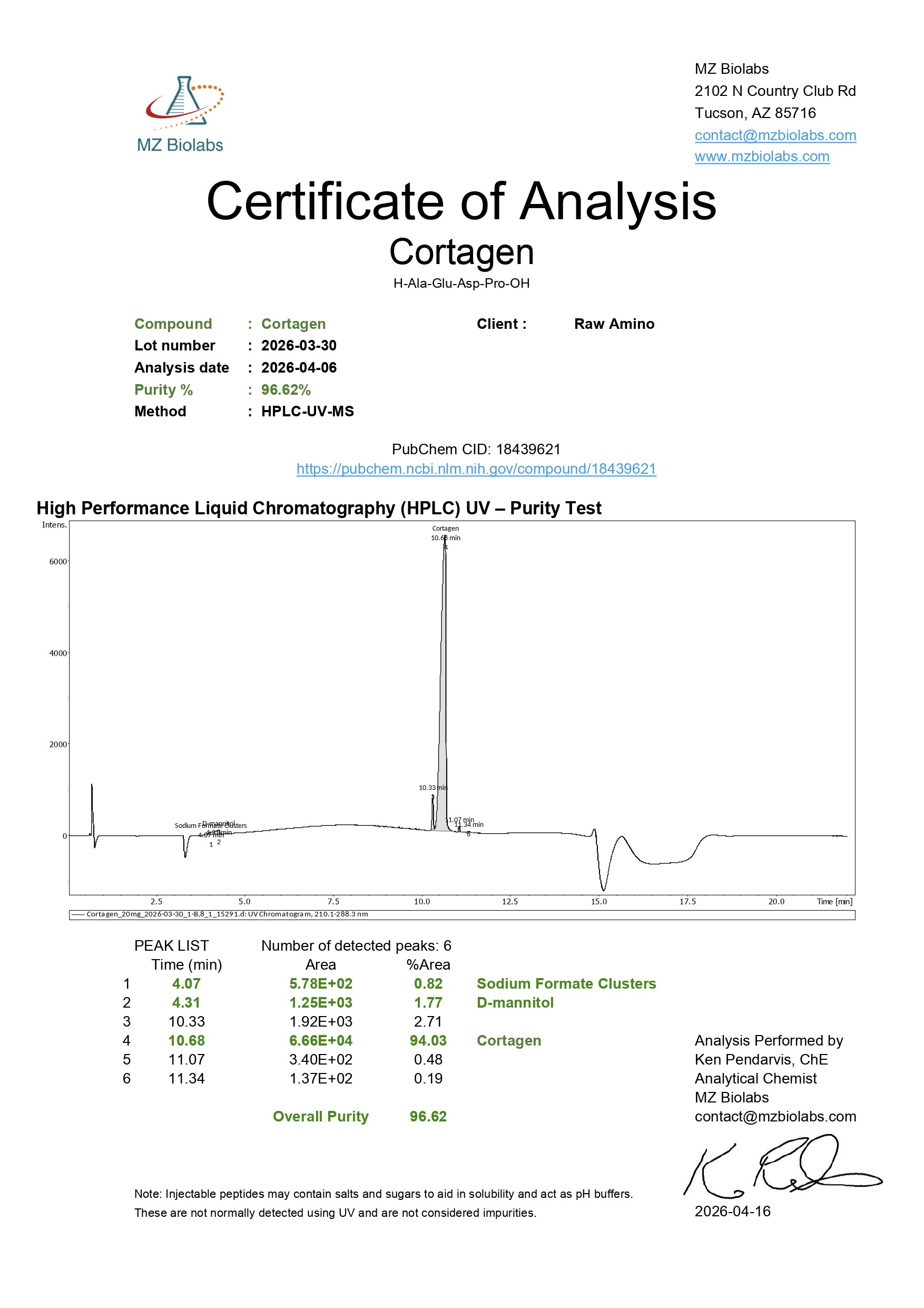
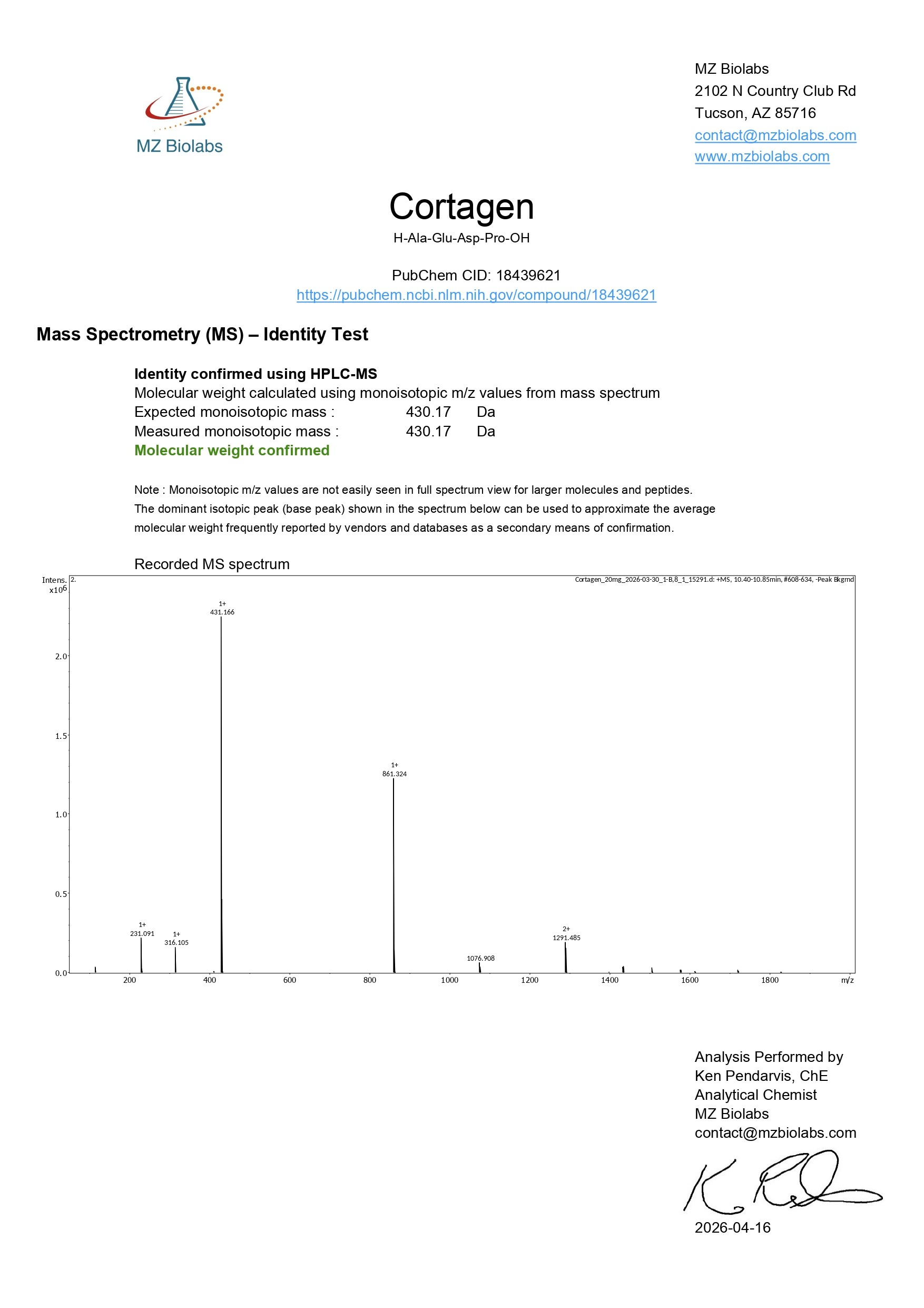
Cortagen is a synthetic tetrapeptide with the amino acid sequence Ala-Glu-Asp-Pro (AEDP). It belongs to the family of short bioregulator peptides, and research proposes that Cortagen may primarily target the nervous system, with secondary roles in immune modulation and cardiovascular tissue. Experimental data suggest that Cortagen can influence inflammatory and oxidative processes within neural tissue, support nerve regeneration after injury, and may affect gene-expression profiles associated with aging and tissue repair. Mechanistic pathways remain incompletely characterized, but evidence points toward modulation of chromatin structure, antioxidant homeostasis, and neuro-immune signalling.
Alternative Names: AEDP tetrapeptide, Cortagen peptide, SCHEMBL5491754
Studies and Research Data
Nervous System & Inflammation
Animal research indicates that Cortagen may stabilise the balance between pro- and anti-inflammatory states in the brain. In models of chronic brain ischemia, Cortagen treatment was associated with reduced lipid peroxidation and preserved antioxidant enzyme activity in neural tissue.
Nerve Repair & Regeneration
In peripheral nerve injury models, Cortagen reportedly accelerated the growth of nerve fibres, with up to ~40% increased regeneration in certain rodent studies following transection and tetrapeptide exposure. These findings suggest potential for facilitating early stages of nerve repair, though conduction velocity and full functional recovery metrics remain under investigation.
Gene Expression & Aging Biomarkers
Microarray analyses in cardiac and neural tissues reveal that Cortagen may influence the expression of multiple genes—over 100 distinct transcripts across several chromosomal regions—in aged or injured models. The peptide is hypothesised to aid in de-condensation of heterochromatin and activation of ribosomal RNA gene regions, thereby possibly restoring certain youthful gene-expression patterns.
Cardiovascular and Immune Contexts
Although primarily studied in neural systems, Cortagen has been implicated in cardiovascular tissue research via its gene-modulatory effects; some studies also report immune-modulatory signals such as elevated interleukin-2 expression in select experimental systems. Nonetheless, haemostasis and major immunity endpoints appear less consistently impacted in comparative studies.
Conclusion
Cortagen is a tetrapeptide bioregulator explored in research settings for its potential in neural protection and regeneration, modulation of oxidative and inflammatory stress in the brain, and gene-expression remodeling associated with aging. While experimental results present promising directions, mechanisms remain only partially defined and outcomes are model-specific. The peptide’s use in research remains strictly exploratory and must be interpreted within that context.
References
- Anisimov S.V., Khavinson V.Kh., Anisimov V.N. “Elucidation of the effect of brain cortex tetrapeptide Cortagen on gene expression in mouse heart by microarray.” Neuro Endocrinol Lett. 2004;25(1-2):87-93.
- Anisimov S.V., Khavinson V.Kh., Morozov V.G., Khavinson V. “Effect of cortagen on gene expression in mouse brain.” Bull Exp Biol Med. 2008 Feb;145(2):228–231. doi:10.1007/s10517-008-0053-8. PMID: 18239817.
- Zarubina I.V., Shabanov P.D. “Cortexin and cortagen as correcting agents in functional and metabolic disorders in the brain in chronic ischemia.” Eksp Klin Farmakol. 2011 Mar–Apr;74(2):8–15. PMID: 21476278.
- Carmona J.J., Michan S. “Biological pathways underlying aging and their relevance to age-related diseases.” Dis Model Mech. 2021 Jul 8;14(7):dmm049494. PMID: 34260655.
- Lin’kova N.S., Khavinson V.Kh., Morozov V.G. “Peptide regulation of genetic functions in aging.” Adv Gerontol. 2001;7:66–72. PMID: 11276314.
Disclaimer:
The products mentioned are intended solely for laboratory research and in-vitro experimentation. They are not approved for human or animal use of any kind. All details provided are for educational purposes only. By purchasing from this site, you agree to comply with our Terms and Conditions.
Only logged in customers may leave a review.
Reviews
There are no reviews yet.